Ask the agent for a file, not a scrape
August 13, 2026

Agent workflow skills that name the artifact beat a toolbox of page fetches. Ask the agent for a file, not a scrape, even when the scrape already lands on disk.
Most setups stop at search and scrape. The session fills up with markdown. Tomorrow that chat is gone and the work is gone with it.
A photocopier is not a memo. The copy can sit in a folder and still not be the job.
A page dump is still a scrape#
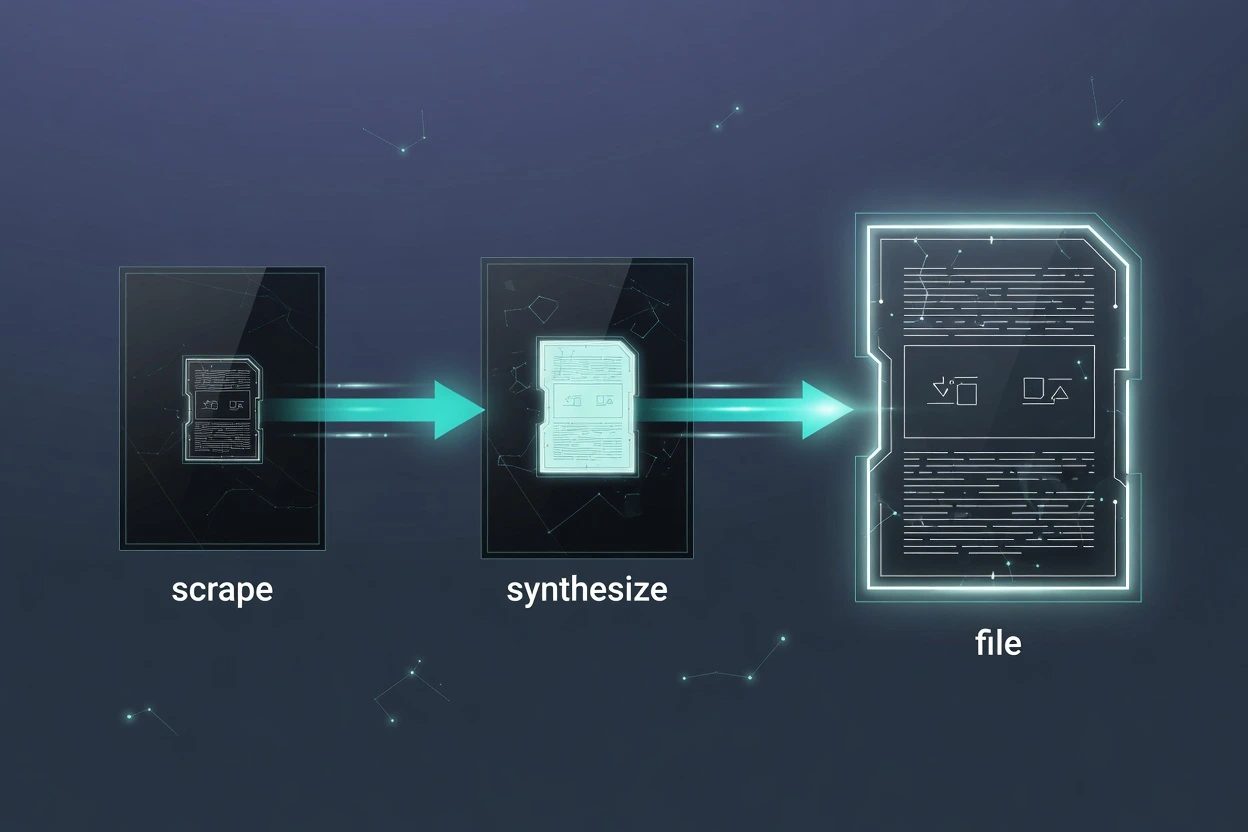
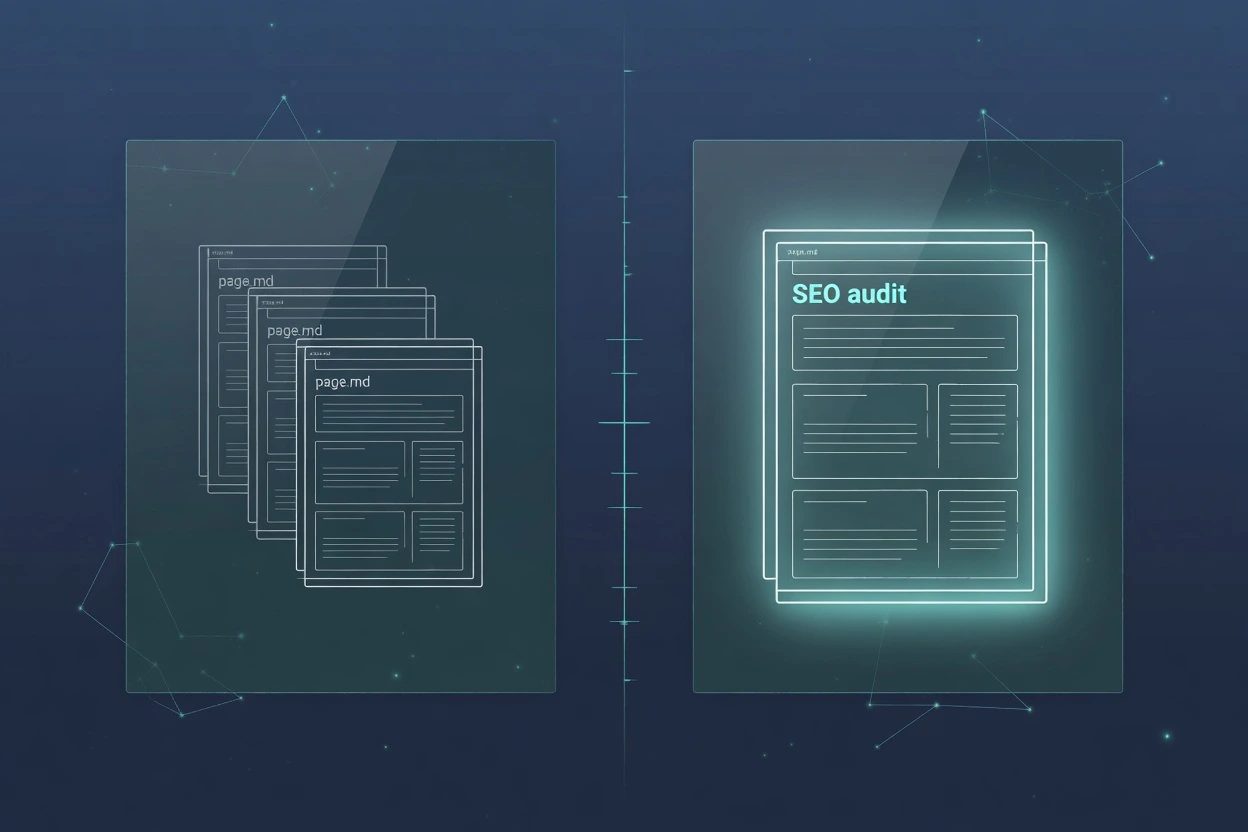
The scrape skill on this machine is sixty-eight lines. Its contract is clean markdown from a URL. Pass -o and the page becomes .firecrawl/page.md. That is still a page.
firecrawl-download goes further. It maps a site, then writes nested files under .firecrawl/. Firecrawl's docs put that path first. Search, then scrape the URL, then interact if the page needs a click.
You'll reopen that folder tomorrow and get the site back. You will not get a verdict.
- No prioritized fixes
- No health score
- No tokens another agent can build from
A r/ClaudeAI thread already treats the markdown dump as the win. Three job sites, deduped, ranked, consolidated into a file. That file is still a scrape with extra sorting.
Bytes on disk are not the test. A named job is.
The skill that matters names the artifact#
Firecrawl's docs table 7 CLI skills, 7 build skills, and 16 workflow skills. This machine landed 29 directories because download and parse came along with the CLI pack.
Most people invoke the CLI seven. The 16 are the ones that already promise a named artifact.
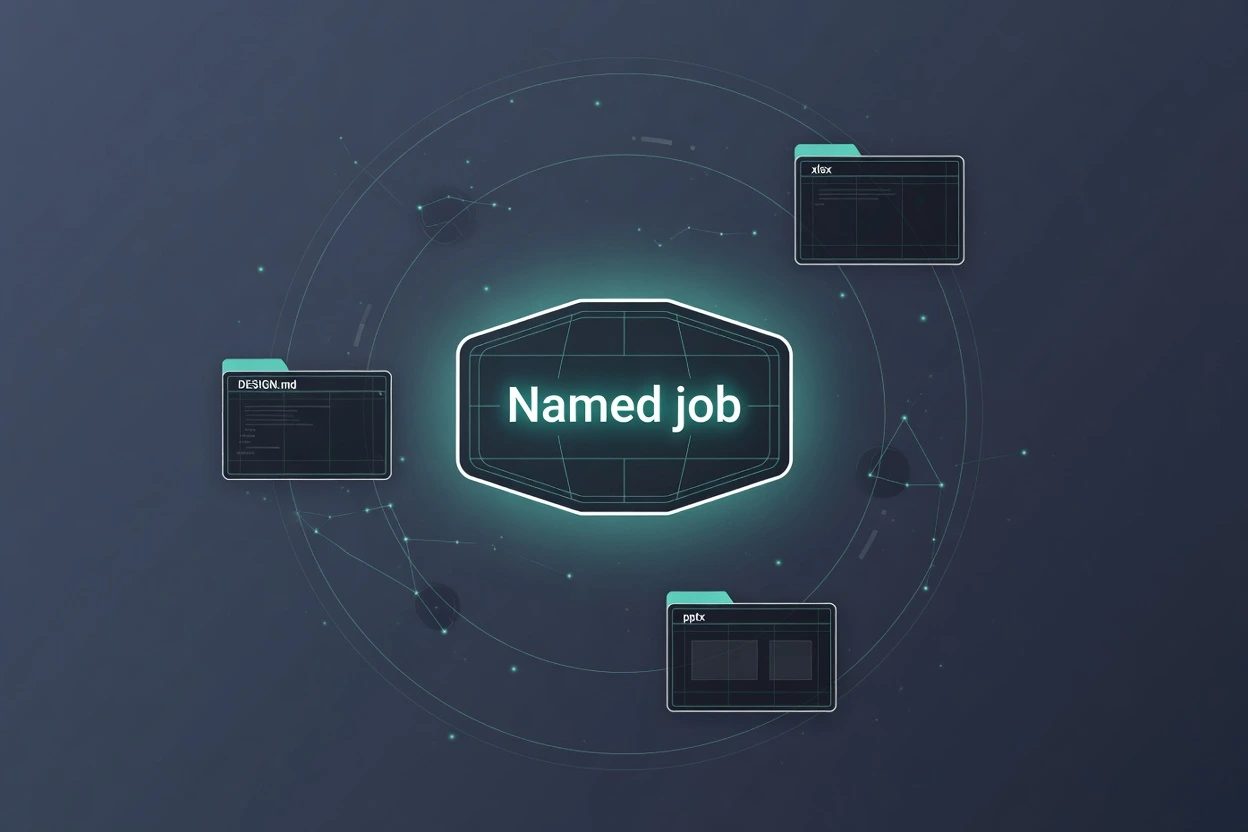
Firecrawl's onboarding page is blunt about when to use them. Use the workflow pack when the goal is a finished artifact, a research report, an SEO audit, a QA report, a lead list, a knowledge base, or a cloned design system, not raw web data. The workflows README repeats it. Target a real user deliverable, not a feature demo.
The workflow layer does not fetch a homepage and stop. It names the artifact.
firecrawl-seo-auditturns a site into a prioritized SEO audit, with sources and a rerun blockfirecrawl-qareturns a unified QA report with reproduction stepsfirecrawl-website-design-clonenames the path,DESIGN.md
The docs even write the two asks next to each other. The CLI ask is firecrawl scrape https://docs.firecrawl.dev. The workflow ask is Use firecrawl-seo-audit on https://example.com. Same URL. Different contract.
That split is the whole post. Version the instructions in git if the prompt repo is the team product. Partition the day if multi-session work is the job. None of that helps if the skill itself only promises a fetch.
Wrapping scrape is the point, not the defect#
The honest objection is that these skills just call scrape. Design-clone even says it should feel like a thin workflow around Firecrawl scrape. That line looks like a kill shot. It is the save.
A wrapper that only reprints the page is a costume. A wrapper that names the artifact, sets a quality bar, and writes rerun inputs is the job. firecrawl-deep-research tells the agent to synthesize instead of listing scrape summaries. That sentence exists because the default failure is a pile of page notes dressed up as research.
Not every workflow skill writes a path. Most return a report shape. Design-clone is the exception that names DESIGN.md. The authoring guide pins recurring jobs to YAML with output: report.md. The skill does not have to schedule itself. It has to make the output stable enough that something else could.
AGENTS.md is pointed. Do not use the workflow repo for one-off scraping during the current session. A named report that dies in the transcript still failed. Ask for the path in the same breath as the job.
n8n's Firecrawl templates stop at the dump. Scrape a URL, park markdown in Drive or a vector store. Fine for RAG. Not a brief you can hand a teammate.
A file-handoff thread on r/aiagents said the quiet part. The agent can finish the task. Getting the finished result out of the session is the last awkward step. If the skill's success is a paste, the skill failed.
File versus scrape questions
Scrape already writes a markdown file. Why ask for anything else?
That file is the page. An SEO audit, a QA report, or a DESIGN.md is a judgment built on top of pages. firecrawl-download exists to save a whole site as local files, and it is still a scrape with folders. The job starts after the dump.
asked on docs.firecrawl.dev ↗If the workflow just calls scrape, what is the third layer for?
The wrapper is the point. Design-clone even says it should feel like a thin workflow around Firecrawl scrape. The extra pages are a collection plan, a quality bar that forbids scrape summaries, and a rerun block that names report.md. Ask for the path too, or the report dies in chat.
asked on raw.githubusercontent.com ↗The agent finished the work but left it in the chat. Does that count?
No. A named artifact the reader can open tomorrow is the contract. A paste in the transcript is the failure the title is about. Ask for the path in the prompt, the same way the workflow authoring YAML pins output to report.md.
asked on reddit.com ↗Is this only a Firecrawl trick?
No. Anthropic's finance pack names agents after the workflow and hands back Excel models and PowerPoint decks. This site's own publish pipeline writes a WORKDIR of files, then upserts them. Firecrawl is just the worked example that splits the layers in public.
asked on github.com ↗The same pattern already ships as spreadsheets#
This is not a Firecrawl product story. Anthropic's financial-services repo names each agent for the workflow it runs. Hand the Pitch agent a target list and the promised return is a comps model in Excel, a pitchbook in PowerPoint, and a cover note. Headless skills exist to produce .pptx and .xlsx files. Same rule, different office.
Gartner spent April 2026 on the CIO version. IT Voice reprinted the line about enterprises dropping copilots by 2028 for platforms that commit to workflow results. That reprint mill already owns the phrase. Skip it. The developer version is smaller and meaner. Name the file.
This site's publish pipeline is the same shape. A run directory holds title-selection.json, a research brief, a block file, then a live page. Eighty published posts came out of that contract. The chat was never the store.
The cost of holding this is that you have to name the job before the first fetch. scrape this is cheap to type. write the SEO audit to audit.md, with prioritized fixes and sources is a commitment. Change the mind if a workflow skill can succeed by dumping the report back into the transcript. Until then, ask for the file.