
Muse Code cheap tier is the one that trains on you
August 24, 2026

Muse Code contributor is the cheap line. It is also the training line.
Meta shipped a terminal agent in beta on August 5 and printed two model IDs for the same Muse Spark 1.2 checkpoint. The Muse Code product page stamps muse-spark-1.2-contributor at $0.10 in and $0.20 out per million tokens, used to improve Meta products. muse-spark-1.2 is $1.25 and $4.25, not used to improve Meta products.
Same checkpoint. The 12.5x input cut is the list price of the repo.
Whoever was told to shrink the AI bill will reach for contributor and never read the chip. Read it.
Two IDs, one model, one training license#
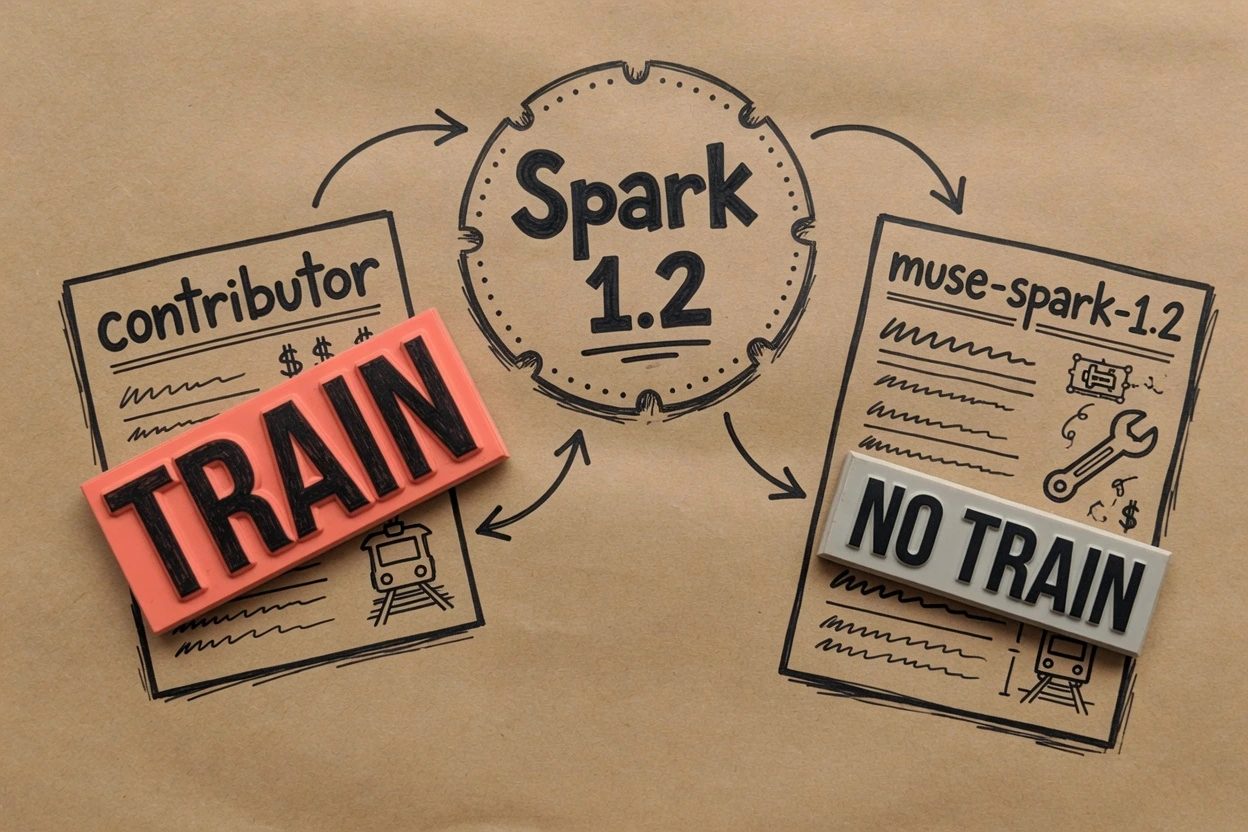
Meta's models docs are blunt about the plumbing. muse-spark-1.2-contributor is the muse-spark-1.2 checkpoint on the discounted Contributor tier, where your prompts and completions may be used to train future Meta models. Modalities match. The 1,048,576 token window matches. The weights match.
The commercial difference is the data clause. Standard pricing, same docs, says your prompts and completions are not used to train Meta models.
muse-spark-1.2-contributorat $0.10 / $0.20, training allowedmuse-spark-1.2at $1.25 / $4.25, training off
The product table uses the softer chip. Used to improve Meta products. Not used to improve Meta products. The pricing page does not bother with the soft version. Heavily discounted token pricing in exchange for permission to use your prompts and completions to train future Meta models. Aimed at prototyping, testing integrations, and scaling experiments where training on your data is acceptable.
Acceptable is doing a lot of work in that sentence. A weekend side project is acceptable. A client's schema in a prompt is not. Meta is not going to make that call for you. The SKU is the call.
Twelve times cheaper is the published price of the repo#
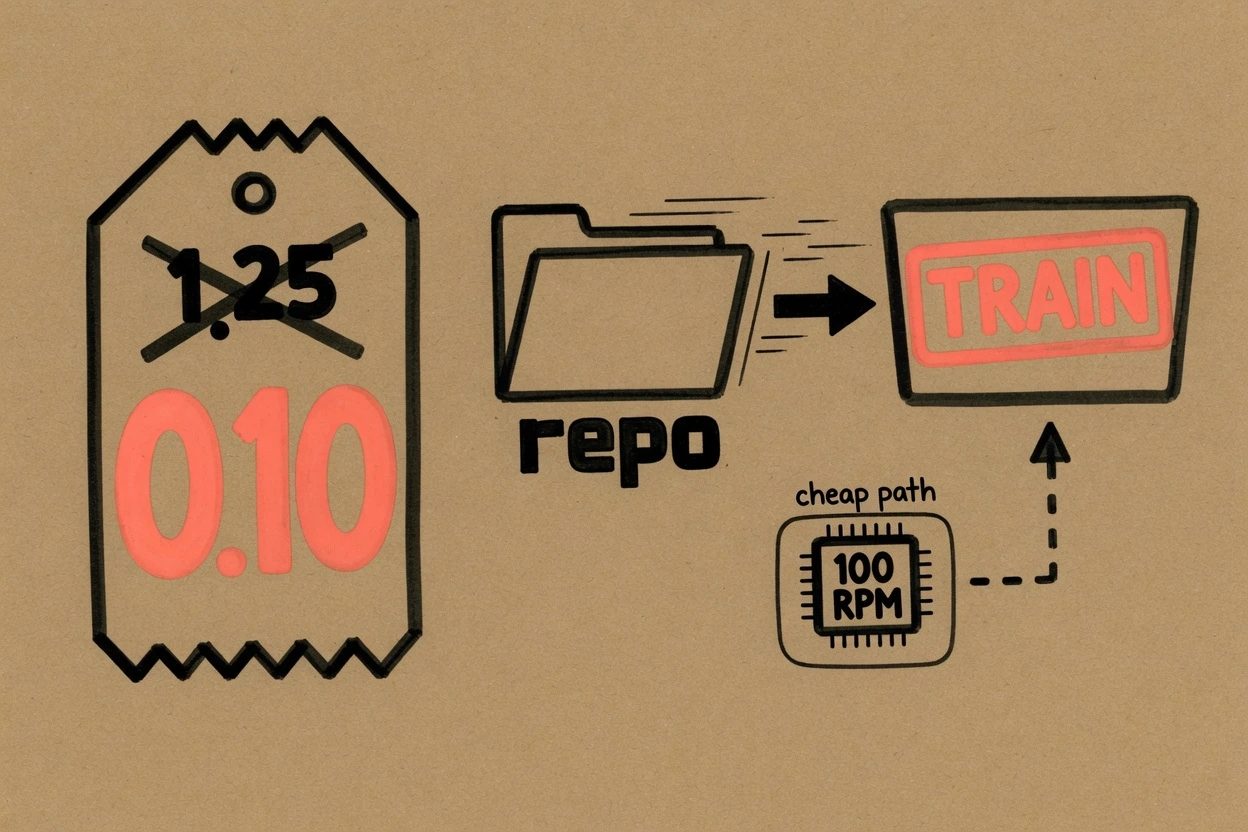
Do the division once and stop rounding it into a vibe. Input $1.25 over $0.10 is 12.5x. Output $4.25 over $0.20 is 21.25x. Cached input $0.15 over $0.002 is 75x, which is the number that makes a long agent loop look free until you remember what you paid with.
The cheap lane is also the tight lane. The pricing docs list Contributor at 100 requests per minute and Standard at 3,000. Tokens per minute sit close, 3 million against 4 million. There is no long-context premium on either SKU.
The launch post prints a different control. Contributor is rate-limited by tokens in a rolling 5-hour window, not by request count, and only in select countries. Those two pages disagree about which throttle fires. Verify on the account screen. HN users in the EU and Australia said the discounted ID never appeared after they signed up. Budget $0.10 only after that screen actually offers it.
Zero data retention is a sales ticket. The launch post says Meta is beginning to accept requests. Contact Meta sales. The public pages do not say which model ID that covers, so do not budget a ZDR promise onto contributor.
The honest offer is still an offer you have to mean#
The Hacker News thread split on schedule. One camp called it the most honest offer a corporation has made. Use the data, pay a cut. The other camp said Meta trains on the expensive traffic too.
Simon Willison's reply is the one that should stick. If the only difference between $1.25 and $0.10 is that you pay more so they can lie to you and breach the contract, that is a crime they printed on a price list. Companies do plenty of ugly things. Printing a 12.5x surcharge as a decoy is a weird one to pick.
The other side has receipts. Claude Code's data usage docs train on Free, Pro, and Max when the consumer toggle is on, including Claude Code from those accounts. Commercial terms do not train unless you join the Development Partner Program. OpenAI's API help article says data sharing for inputs and outputs is disabled by default, with a complimentary daily token cap for some orgs that opt in.
Those are toggles buried in settings. Meta printed a second model ID. You type it. You keep paying. You keep sending them the loop.
Honest still leaves the client-work question. A public GPL repo is already on the internet. A private app with customer tables is a different bet.
The watermark fight is about what a detector can read in a PR. The Enterprise transcript pull is about who inside the company can read the sitting. This SKU is about who trains the next checkpoint on the sitting. Different desk. Same file in the prompt.
The CLI default is the expensive line#
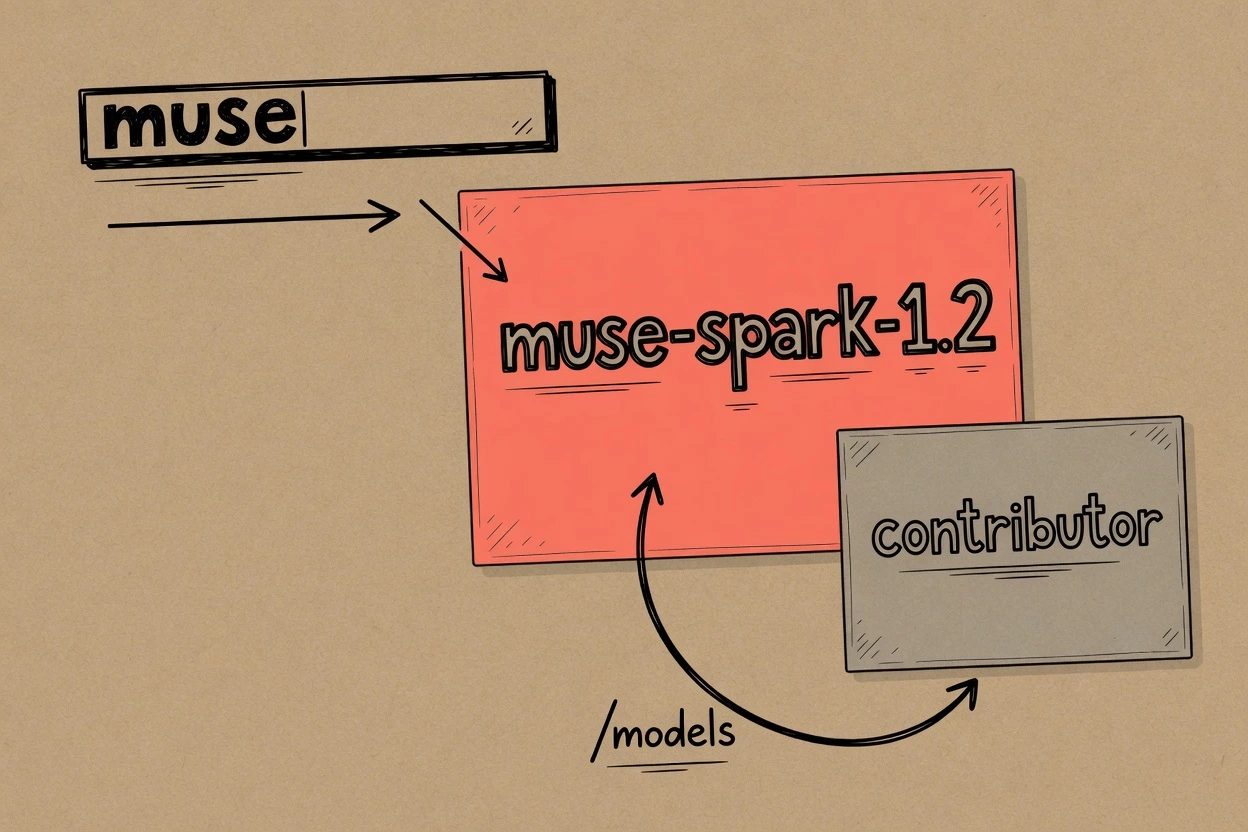
Here is the part the recaps keep getting wrong. The product table lists contributor first. The launch post says Muse Code starts on a contributor tier. Muse Code's own docs say the default model is muse-spark-1.2. Configuration repeats it. Override with --model, or switch mid-session with /models.
Docs win for what muse boots. Marketing wins for what the eye hits first. If you install the CLI and never touch /models, you are on the no-train ID and you are paying $1.25. If you paste the cheap ID because a blog told you Muse Code is almost free, you just sold the transcript.
The install is one curl from dev.meta.ai. Billing is usage-based. A payment method has to be on file. There is no printed weekly cap on that product page, so do not invent one. The limit you can actually read is the SKU you selected.
Pick contributor on purpose. The 12.5x is the fee. Pay it only when the repo is the fee you meant to pay.
- OSS and scratch repos you would paste into a public dataset tomorrow
- Stay on
muse-spark-1.2the moment a prompt would include a customer, a key, or a private schema
Contributor SKU questions
Does muse-spark-1.2-contributor train on prompts and completions?
Yes. Meta's pricing docs call it heavily discounted token pricing in exchange for permission to use your prompts and completions to train future Meta models. The product page stamps the same ID as used to improve Meta products.
asked on reddit.com ↗Is Muse Code's default model the cheap training SKU?
No. Muse Code's own docs say the default model is muse-spark-1.2, the standard ID that is not used to train. The launch blog lists contributor first and says Muse Code starts on a contributor tier. Treat the docs as what muse boots, and switch with --model or /models if you mean to sell the transcript.
Can contributor be used outside the US?
The launch blog says the contributor ID is available in select countries. HN users in the EU and Australia reported they could not use the discounted SKU after signing up. Confirm on the account screen before you budget around $0.10.
asked on news.ycombinator.com ↗Is this the same deal as OpenAI's complimentary API tokens?
No. OpenAI's API data sharing is off by default and the free-token program is a daily cap for eligible orgs. Meta printed a second model ID with a 12.5x input cut and no complimentary-token lottery. You pick the SKU. You keep paying. You keep training them.
asked on news.ycombinator.com ↗